
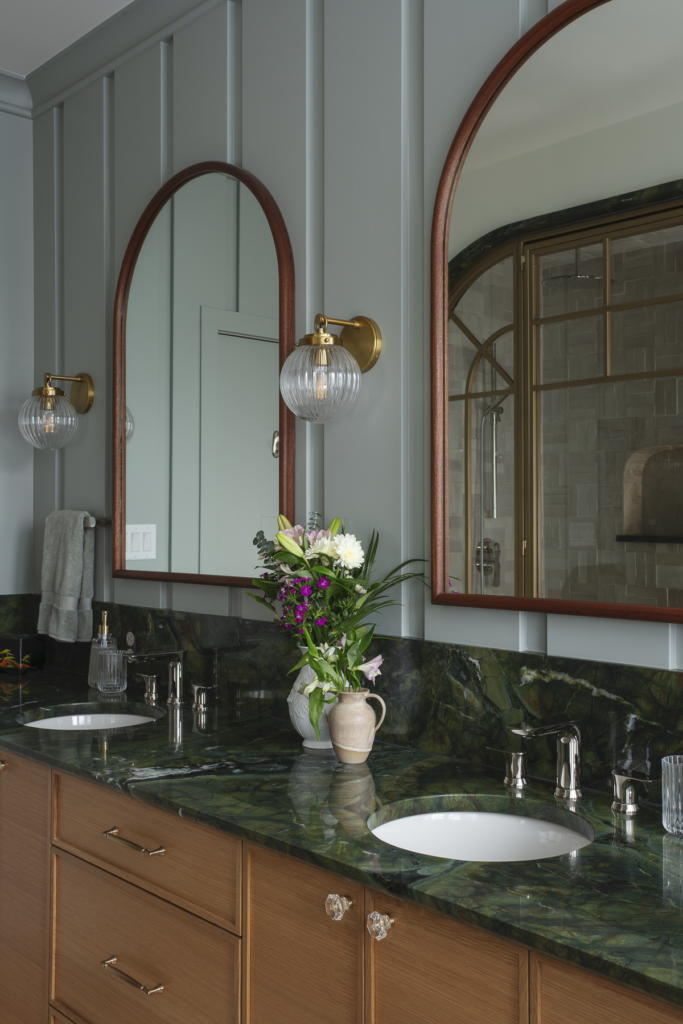
I get asked the same question almost every time I sit down with a new client: what’s my style? They say it like an apology, like they should already know the answer, like everyone else walked through the door with a Pinterest board and a paint chip already chosen. But I don’t think style works that way, and honestly, I don’t think it was ever meant to.
Here’s the secret I wish more people knew: your style isn’t something you build; it’s something you already have. It’s in the sweater you reach for every single time; in the restaurant you keep going back to even though there are a hundred newer ones; in the hotel lobby that made you sigh the second you walked in, though you couldn’t quite say why. These aren’t random preferences scattered across your life. They’re threads of the same story, and defining your aesthetic is simply a matter of noticing what you already love and giving it a name that means something to you.
Memory, Not a Mood Board
Somewhere along the way we started treating style like something to assemble; scroll enough images, save enough pins, and eventually a personality will emerge from the algorithm. I understand the appeal (I’ve fallen down that never-ending scroll myself), but I’ve never seen it actually work. The homes that feel most like the people living in them were never built from a mood board. They were built from memory: a grandmother’s table that still bears scratches from family meals, the smell of a wood-panelled cabin from a childhood summer, the particular blue of a door in a city you visited once and never forgot.
Memory holds texture and feeling in a way a saved image never can and most importantly it carries the why along with the what. When a client tells me they love a certain shade of green, I don’t just want the hex code, I want to know where they first fell in love with it. That’s where the real design decisions live.
Noticing What You Already Love
So, if you’re staring down a blank room wondering where to start, don’t start with a search bar. Start by paying attention. What do you keep coming back to, in your closet, your kitchen, your travels? What object in your home would you save first in a fire, and what does that say about you? What made you feel most like yourself, the last time you felt truly at home somewhere?
None of these questions will hand you a tidy five-word style label, and that’s fine; labels were never really the point and are often misunderstood anyway. What they’ll give you instead is a thread, and once you can see it, you can start pulling it through every room in your house. Your aesthetic was never missing, it was just waiting to be named.
That, more than any trend report or curated feed, is where good design begins: not in discovering something new, but in finally recognizing what was there all along.